The Differences between Classical (Pavlovian) Conditioning and Operant (Skinnerian) Conditioning
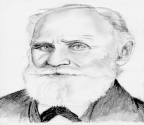
Pavlov
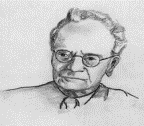
Skinner
|
Classical Conditioning |
Operant Conditioning |
|
Deals only with involuntary behaviour |
Mostly deals with voluntary behaviour |
|
Reinforcement strengthens the conditioned response but is neutral – it works whether the human/animal likes it or not |
Reinforcement strengthens the conditioned response and is either positive(something the human/animal likes) or negative (the removal of something unpleasant) |
|
The stimulus comes before the conditioned response in each case |
Reinforcement is always given after the voluntary behaviour has been performed- and either strengthens it or weakens it |
|
A stimulus can only trigger one type of response, for example, a puff of air across the eye always gives an eye blink |
A reinforcer can be used to strengthen many different types of behaviour using different behaviour shaping techniques |
|
Shows generalisation, discrimination, extinction and spontaneous recovery |
Same as classical conditioning |
|
Relies on the linking or association of stimuli and responses |
Same as classical conditioning |
click HERE to return to homepage